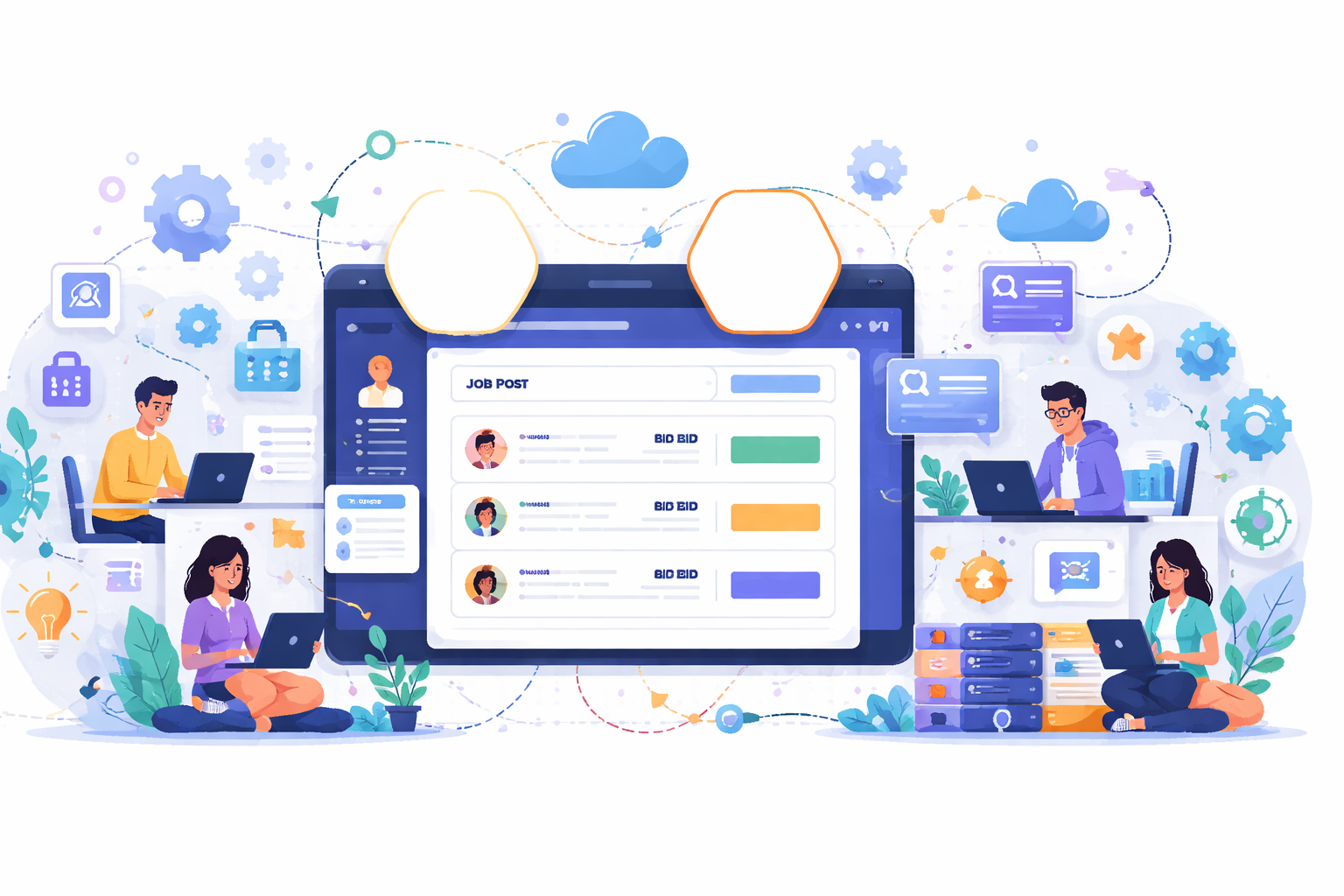
AI is no longer just a coding assistant. It’s becoming a strategic business driver in modern web development. What started as autocomplete for developers has evolved into a system that influences project timelines, UX personalization, revenue optimization, and long-term digital strategy.
TL;DR
- AI is accelerating development speed, but its real value lies in strategic impact.
- Companies using AI effectively see gains in productivity, personalization, and revenue performance.
- AI-driven personalization can significantly improve customer engagement.
- AI in web projects now influences SEO, CRO, analytics, and customer experience.
- Businesses that treat AI as infrastructure — not just tooling — gain long-term advantage.
1. AI Started as a Developer Productivity Tool
Initially, AI’s role in web development was tactical: code suggestions, debugging support, and faster documentation.
Tools like GitHub Copilot demonstrated measurable productivity improvements. Research shows developers completed tasks significantly faster when using AI-assisted coding tools1.
This first wave of AI adoption focused on:
- Autocomplete and code generation
- Error detection
- Unit test generation
- Refactoring suggestions
But this was just the beginning.
2. The Shift: From Productivity to Business Performance
Organizations began realizing AI’s value extended beyond developer efficiency. According to McKinsey, generative AI has the potential to add trillions in value across industries2.
In web projects, this shift looks like:
- AI-driven personalization engines
- Predictive content optimization
- Smart search functionality
- Automated A/B testing recommendations
- Conversion optimization insights
Instead of asking, “How can AI help developers?” companies began asking, “How can AI improve revenue performance?”
3. AI as a Revenue Multiplier in Web Projects
Personalization at Scale
AI enables real-time personalization based on user behavior. Research from Boston Consulting Group shows that brands leveraging advanced personalization generate significantly higher revenue growth3.
For web projects, that means:
- Dynamic landing pages
- Behavior-based product recommendations
- Personalized CTAs
- Segment-driven content blocks
Smarter Search and Navigation
AI-powered search improves product discovery and reduces friction. This is especially critical in e-commerce and content-heavy websites4.
Predictive Analytics
AI can identify user drop-off patterns, predict churn, and recommend optimization paths — turning websites into continuously learning systems.
4. AI in SEO and Content Strategy
AI has also reshaped how websites are structured and optimized for search. Search engines now use advanced AI models to evaluate content quality and intent5.
This means web projects must integrate:
- Semantic content structuring
- Intent-based optimization
- AI-assisted content audits
- Automated internal linking suggestions
AI is no longer just generating content — it’s influencing how content is evaluated.
5. AI as Infrastructure, Not a Feature
The biggest strategic shift is this:
AI is moving from feature to foundation.
Instead of adding chatbots as an afterthought, leading companies are building AI into:
- CMS workflows
- Customer data platforms
- Marketing automation systems
- Performance monitoring dashboards
This infrastructure-level adoption creates compounding advantages over time.
6. The Competitive Advantage of AI-Driven Web Strategy
According to PwC, AI could contribute up to $15.7 trillion to the global economy by 20306. Businesses that integrate AI strategically into digital assets are positioning themselves for disproportionate growth.
The future of web development isn’t just faster builds.
It’s smarter websites.
Websites that:
- Learn from user behavior
- Adapt content dynamically
- Optimize performance automatically
- Align with revenue goals
Frequently Asked Questions (FAQs)
1. Is AI replacing web developers?
No. AI augments developers by automating repetitive tasks and improving efficiency, but strategic architecture, UX decisions, and business alignment still require human expertise.
2. How does AI improve website ROI?
AI enhances personalization, improves conversion optimization, reduces development time, and provides predictive insights — all of which impact revenue performance.
3. Is AI integration expensive for web projects?
Costs vary depending on implementation depth. Many CMS platforms now include built-in AI features, lowering adoption barriers.
4. Can small businesses benefit from AI in web development?
Yes. Even basic AI tools like smart chatbots, content assistants, and analytics automation can improve performance without enterprise-level budgets.
5. What’s the first step to making AI strategic instead of tactical?
Start by aligning AI use cases with measurable business outcomes — not just development efficiency.
Sources
- GitHub. “The Impact of GitHub Copilot on Developer Productivity.” Link
- McKinsey & Company. “The Economic Potential of Generative AI.” Link
- Boston Consulting Group. “The Value of Personalization.” Link
- Salesforce. “State of the Connected Customer.” Link
- Google Search Central. “Understanding Search Ranking Systems.” Link
- PwC. “Sizing the Prize: What’s the Real Value of AI for Your Business?” Link