
Following up with inactive leads at the right time can make all the difference in converting them into customers. By setting up an automated workflow, you can ensure timely engagement by your sales reps or contact owners without manual effort.
Here’s a step-by-step guide to creating a follow-up workflow using automation:
Step 1: Access Workflows
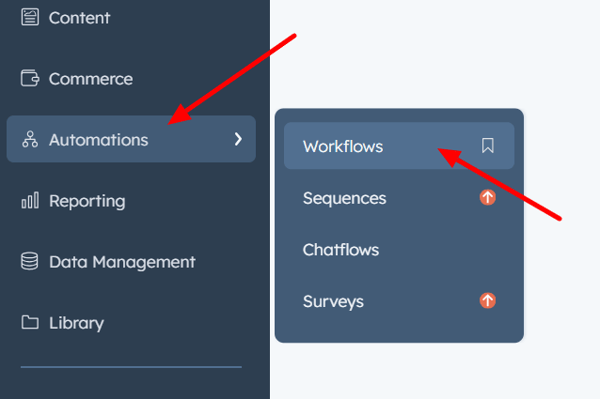
Navigate to Automations from the left sidebar and then click on Workflows.
Step 2: Create a New Workflow
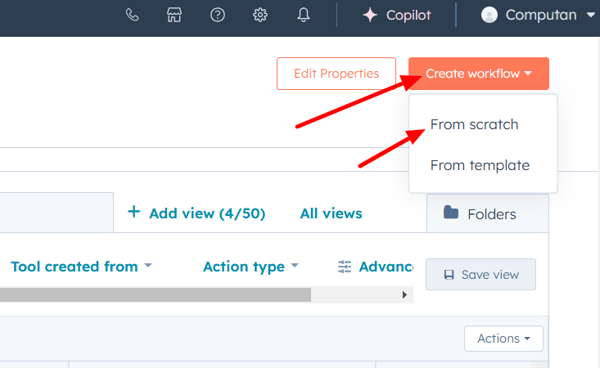
Click on the Create Workflow button at the top right-hand side and select From Scratch.
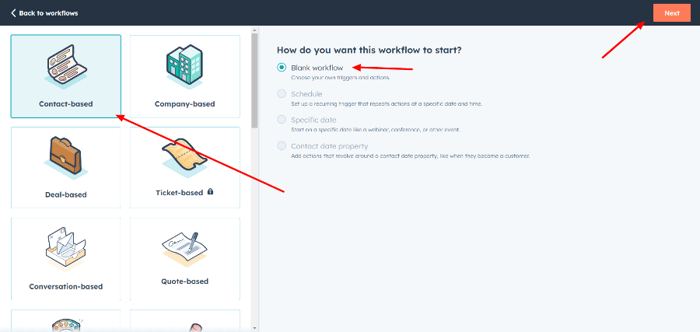
Choose Contact-based Workflow, mark 'blank workflow' as shown in the image below and click Next.
Step 3: Set Up Workflow Details
Assign a name to your workflow by clicking on the top-middle section. You can write a complete description of the workflow for the future team members to see and take reference from.
Choose the trigger and actions that will define the workflow.
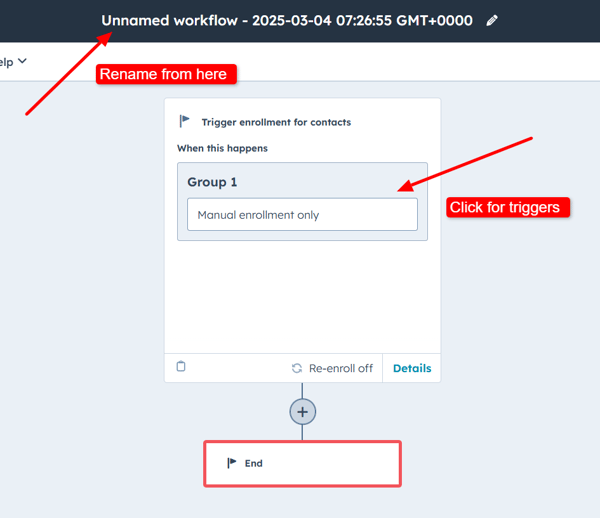
Under Trigger enrollment for contacts, select Manual enrollment only.
Step 4: Define Enrollment Triggers
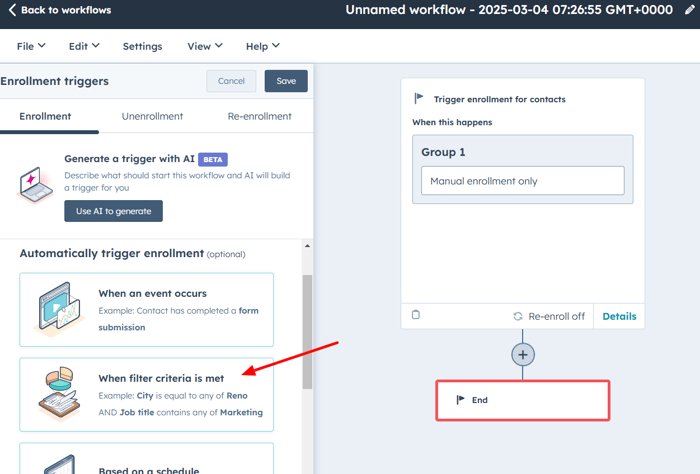
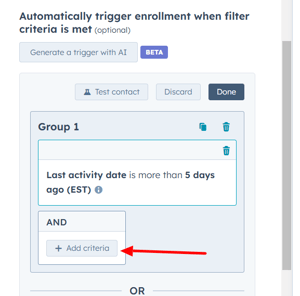
From the left sidebar, choose Trigger when the filter criteria is met. Because this is not an event-based workflow. This is filter based workflow. We want to filter the contacts who have been inactive for the last 'n' number of days.
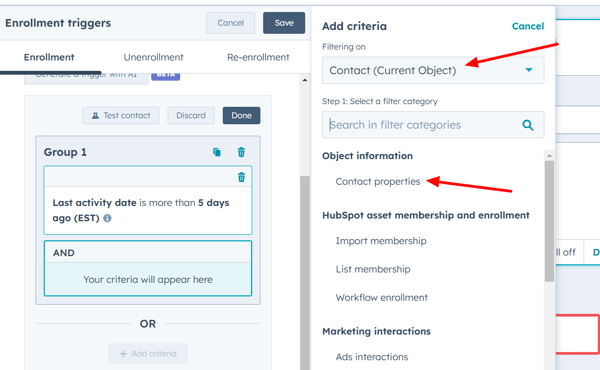
Add a new criteria:
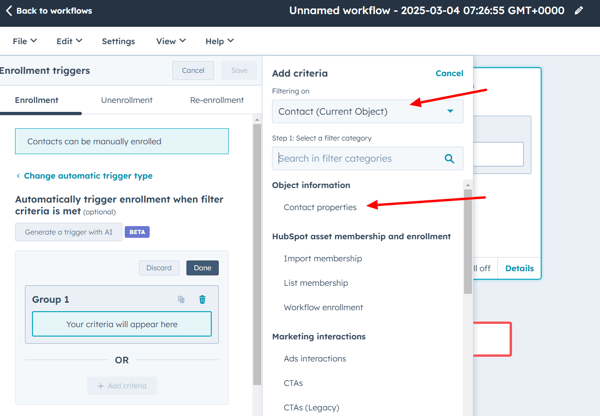
Set filtering to Contacts and then click on Contact Properties to explore the options under that.
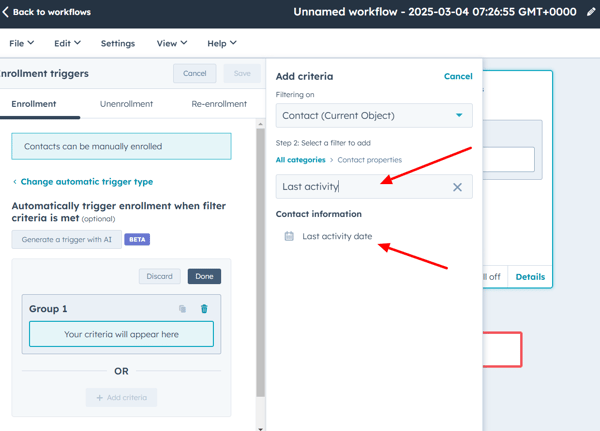
Search and select Last Activity Date and apply the "is more than" filter. Enter the number of days since the last activity.
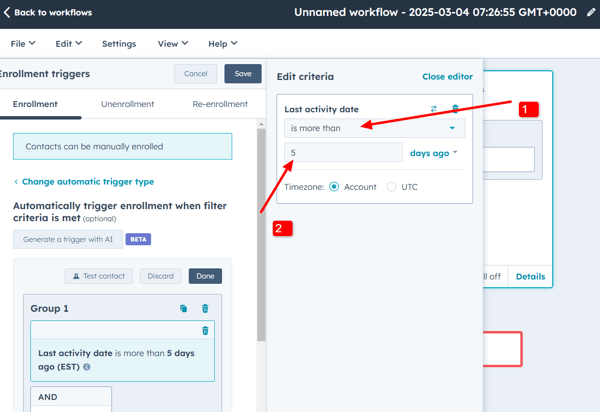
You can set the number of days based on the nature of your business process and sales pipeline. In some cases, the prospects typically respond in 5 days, while in some cases, they respond in 10-15 days.
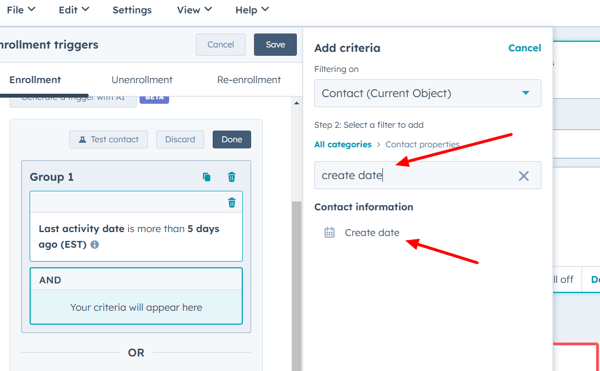
Add another criteria by clicking + Add Criteria button and selecting Create Date. If you do not set this criteria, then the workflow will process all the contacts added from day 1 of your CRM.
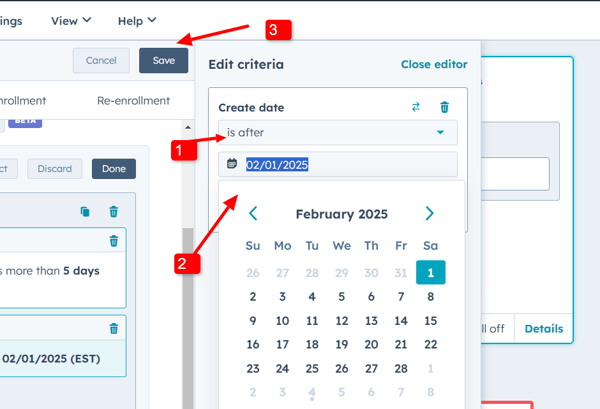
If you want to target contacts added in the last month, set the date range accordingly. By applying this filter, the workflow will only process the contacts that are added to the CRM after 1st Feb. You can choose the time/date filter as per your preference.
Step 5: Configure Workflow Actions
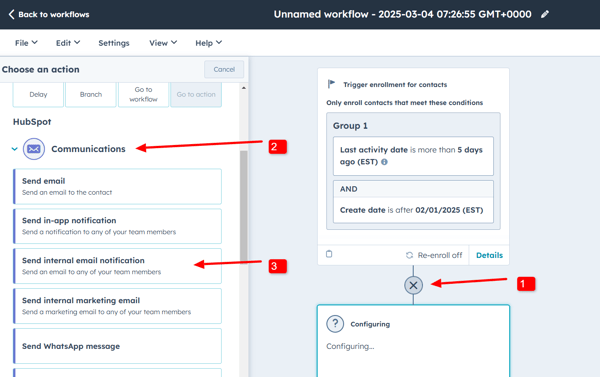
Choose Communication dropdown and select the option - Send Internal Email Notifications.
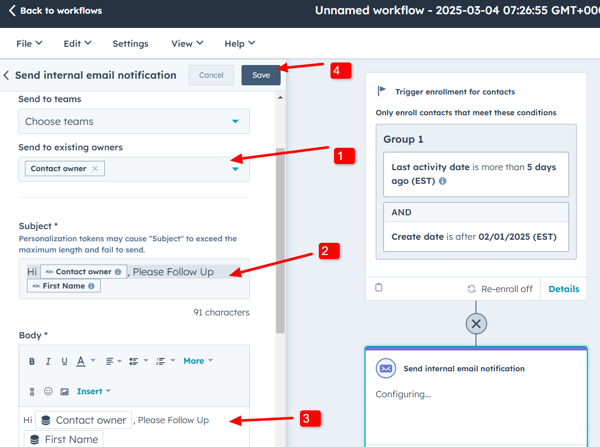
Set the recipient as Existing Contact Owners and check the Contact Owners box. Personalize the email subject line and email body to ensure an engaging message.
Step 6: Review & Activate
Test your workflow to ensure everything runs smoothly.
Once satisfied, Go Live, turn on the workflow, and let automation do the work.
With this setup, your team will be notified when leads are inactively engaging but haven’t converted yet, allowing for timely and effective follow-ups.
This workflow ensures that your sales reps or contact owners stay proactive with inactive leads. They’ll receive timely email notifications, enabling them to follow up promptly and prevent potential opportunities from slipping through the cracks. This way, your CRM remains active and free of overlooked leads.
FAQs
1. How do I define inactivity criteria in HubSpot?
You can define inactivity using contact properties and activity filters. Common filters include “Last marketing email open date,” “Last activity date,” or “Last contacted date.” Combine these with timeline activity filters like “has not opened email in X days.” This allows precise segmentation of disengaged leads.
2. Can HubSpot automatically re-engage cold leads?
Yes, HubSpot workflows can automatically send re-engagement emails, update lifecycle stages, assign tasks to sales reps, or even change lead status. You can create a multi-step nurture sequence specifically for cold leads. Automation ensures consistent follow-up without manual effort.
3. How long should I wait before marking a lead as inactive?
There’s no universal rule, but many companies use 60–90 days of no engagement as a benchmark. B2B sales cycles may require longer windows depending on industry. The key is aligning your inactivity definition with your average sales cycle and buyer behavior data.
4. Can I automatically unenroll leads if they re-engage?
Yes. In HubSpot workflows, you can set goal criteria so contacts are unenrolled if they open an email, click a link, submit a form, or revisit your website. This prevents unnecessary follow-ups and keeps your automation smart and responsive.
5. How do I prevent over-emailing inactive leads?
Use suppression lists and workflow exclusions. You can exclude contacts who are already in another nurture campaign or who recently received marketing emails. Setting communication frequency limits within HubSpot also helps protect sender reputation.
6. Should inactive leads be recycled to sales or marketing?
That depends on engagement level. If a lead re-engages, you can automatically update their lifecycle stage or assign them to a sales rep. If they remain inactive after multiple attempts, consider moving them to a long-term nurture list or suppressing them to maintain database health.
7. Can I score inactive leads differently in HubSpot?
Yes. You can reduce lead scores based on inactivity using lead scoring properties. For example, subtract points if there’s no engagement in 60 or 90 days. This ensures your sales team prioritizes active, high-intent contacts.
8. Does creating an inactive lead workflow improve email deliverability?
Yes, when done correctly. By identifying and cleaning disengaged contacts, you improve open rates and reduce spam complaints. Over time, this strengthens your sender reputation and overall email performance.
9. What are common mistakes when setting up inactive lead workflows?
Common mistakes include:
-
Not clearly defining inactivity criteria
-
Forgetting to exclude current customers
-
Not setting re-engagement goals
-
Overloading contacts with too many emails
-
Failing to clean permanently inactive contacts
-
Careful planning and testing prevent automation fatigue.


.jpg)